


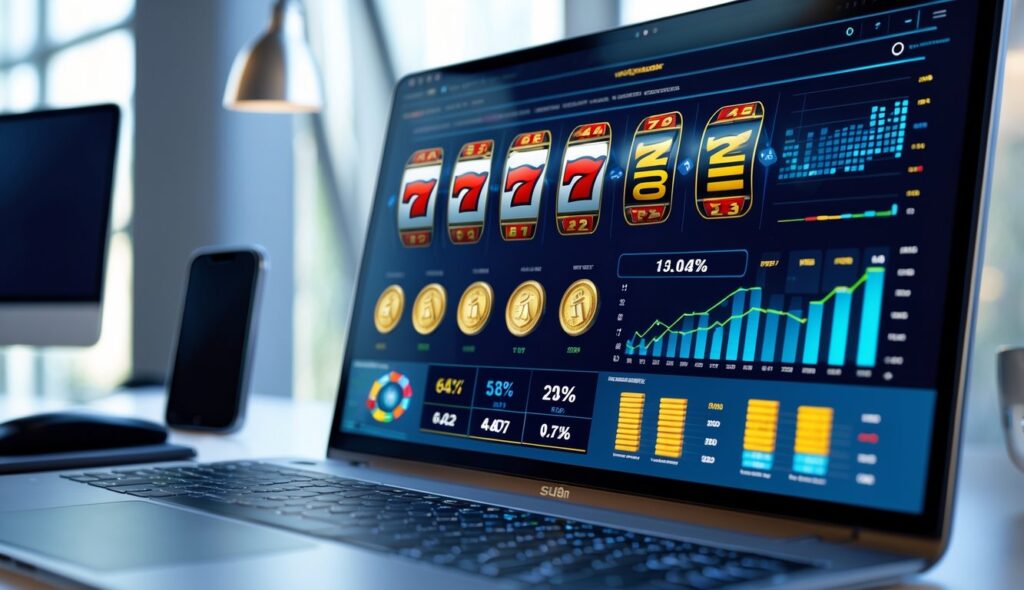
You want slot games that show real-time RTP and work smoothly on your smartphone without extra setup. Use live RTP displays to spot slots with higher payout percentages in real time, then pick games from reputable providers that run well on mobile. This lets you make faster, smarter choices and reduces time wasted on unreliable titles.
This article shows how real-time RTP works, what to look for in mobile compatibility and security, and simple strategies to find consistent winners without complicated tools. Follow the steps and tips here to turn your phone into a straightforward, hassle-free way to play smarter and more safely.
Understanding Real-Time RTP in Online Slots
Real-time RTP shows the current payout behavior of a slot game based on live play data, variance, and recent outcomes. It helps you judge short-term payout trends, compare active games, and choose slots that suit your bankroll and play style.
How Real-Time RTP Works
Real-time RTP calculates the percentage of wagered money returned to players over a recent sample of spins rather than the game’s long-term theoretical RTP. Data sources include server-side spin logs, aggregator feeds, or trackers that sample thousands of spins over minutes or hours.
You’ll see values update continuously; a hot streak can push a short-term RTP above the theoretical rate, while a cold period will push it lower. Platforms typically display sample size and time window—pay attention to both because a small sample (hundreds of spins) produces noisy, unreliable RTP numbers.
Trust feeds that disclose methodology and sample size. If the tracker masks sample size or uses an opaque aggregation, treat the real-time RTP as an informal indicator, not a guarantee of future performance.
Benefits of Real-Time RTP
Real-time RTP helps you make situational decisions: you can avoid recently cold games or join those showing higher short-term returns. That information aids bankroll management by indicating when volatility is leaning toward frequent smaller returns or toward a dry run with fewer payouts.
It also lets you compare similar titles across casinos to spot differences in live payout patterns caused by player behavior or promotional activity. Use real-time RTP alongside volatility metrics and hit frequency for a fuller picture; RTP alone won’t tell you about jackpot probability or feature-trigger frequency.
Keep expectations realistic: real-time RTP can inform choices but cannot predict outcomes. Use it as one tool in your strategy rather than a definitive rule.
Typical RTP Ranges in Online Games
Most modern online slots have theoretical RTPs between 92% and 98%. Lower-end games often sit around 92–94%, mid-range titles around 94–96%, and high-RTP slots range 96–98% or slightly higher for select niche games.
Live table-format example:
- Low RTP: 92.0%–94.0%
- Medium RTP: 94.1%–96.0%
- High RTP: 96.1%–98.0%+
Remember that real-time RTP will swing above or below these bands over short samples. Use the long-term theoretical RTP printed on the paytable for expectations over very large numbers of spins, and use real-time RTP for short-term situational insight.
Mobile Compatibility and User Experience
You get smooth gameplay, clear controls, and fast load times on modern smartphones when developers focus on mobile-first layouts, touch optimization, and efficient asset loading. Prioritized features include adaptive UI, compact menus, and real-time RTP displays that update without draining battery or data.
Optimizing Slot Games for Smartphones
Design the game for one-thumb and two-thumb play with large tappable areas and minimal on-screen clutter. Use gesture-friendly controls (tap, swipe, long-press) and place primary actions—spin, bet adjust, auto-play—within thumb reach.
Compress and serve graphics in WebP or AVIF to reduce download size while keeping crisp visuals on high-DPI screens. Implement vector-based UI elements for scaling and to avoid pixelation on different resolutions.
Keep menus shallow: group settings, paytables, and transaction options under a single collapsible panel. Offer quick-access RTP and session stats in a compact overlay so you can check live return figures without leaving the spin screen. Provide an option to switch between demo and real-money modes with one tap.
Responsive Design Features
Adopt a fluid grid that reflows content based on viewport width and orientation. Use CSS media queries and breakpoints that target common phone widths (320px, 375px, 412px, 390px). This prevents cramped controls on small phones and wasted space on large ones.
Make typography responsive with relative units (rem, vw) so labels and numerical RTP values remain readable at a glance. Apply high-contrast color schemes and adjustable text-size controls for visibility in bright outdoor lighting.
Ensure interactive elements use consistent spacing and state indicators (pressed, disabled, loading). For live RTP readouts, implement asynchronous updates that replace only the numeric fields rather than reloading the entire UI, preserving layout stability and preventing input loss.
Performance Considerations
Prioritize fast initial load by lazy-loading nonessential assets like tutorial animations and promo banners. Keep core game logic and RTP feeds in memory-efficient modules and use worker threads to offload calculations from the main UI thread.
Measure and cap CPU and GPU usage to avoid overheating and battery drain during long sessions. Use adaptive frame rates: reduce animation frequency when the device reports thermal throttling or low battery.
Optimize network usage for real-time RTP by polling at sensible intervals (for example, every 5–15 seconds) or using lightweight WebSocket messages that send only changed values. Provide an option to limit RTP refresh frequency to conserve data when you’re on a metered connection.
Easy Access and Hassle-Free Play
You can start spinning on your smartphone in seconds and manage deposits, withdrawals, and RTP checks without complex steps. The focus is on quick entry and simple money flow so you spend more time playing and less time setting up.
No-Registration Platforms
No-registration (walletless) sites let you play demo and real-money slots without creating an account or remembering passwords. You typically connect with a verified e-wallet or a one-time PIN sent to your phone, so identity checks happen automatically through your payment method or mobile number.
These platforms reduce friction: instant play from the browser or an APK, preserved session data via cookies, and quick RTP access without logging into a dashboard. Be mindful that some sites limit withdrawal amounts or require KYC only when you request cashouts. Check terms for withdrawal thresholds and the exact KYC trigger to avoid surprises.
Security varies, so pick providers with HTTPS, visible licensing info, and clear RTP reporting. If you value privacy, prefer platforms that allow demo play and real-money bets through anonymized e-wallets until you need to verify.
Seamless Payment Options
Top smartphone-friendly sites support multiple payment rails: e-wallets (e.g., Skrill, Neteller), mobile carrier billing, QR-based bank transfers, and crypto. E-wallets give near-instant deposits and fast payouts; carrier billing is ideal for small stakes without sharing bank details; crypto offers low fees and privacy for larger transfers.
Look for clear processing times and fee tables before depositing. A useful checklist:
- Deposit and withdrawal speeds (minutes vs. days)
- Minimum/maximum limits per method
- Any fixed or percentage fees
- KYC requirements tied to payout sizes
Enable two-factor authentication on payment accounts and use methods with transaction logs you can reference. That makes disputes easier and keeps your funds traceable if you need support.
Strategies for Choosing Winning Slots
Focus on measurable factors that affect expected return and short-term volatility. Prioritize RTP percentages, volatility levels, and feature sets that match your session goals.
Analyzing RTP Data
Check the stated RTP (Return to Player) on the game’s info page or the casino’s help section; reliable providers list RTP to two decimal places (e.g., 96.45%). Treat RTP as a long-term average — it estimates expected return over thousands of spins, not guaranteed short-session results.
Compare RTP across versions of the same title. Some games have multiple RTP modes (e.g., 94.00% vs 97.50%) depending on jurisdiction or bonus features. Record RTPs in a simple list before you play so you can choose the best option quickly on your smartphone.
Watch for provider transparency. Prefer licensed casinos and well-known developers that publish audited RTP reports. Avoid claims like “always gacor” without published numbers.
Identifying High-Payout Games
Look for games with RTPs above 96% if your goal is higher expected return. Also evaluate volatility: high RTP + high volatility can still mean long dry spells, so match volatility to your bankroll and session length.
Inspect bonus mechanics and hit frequency. Features like free spins, multipliers, and cascading reels increase effective payout variance. Note the average hit size and frequency from game reviews or provider data and prioritize games whose bonus structure complements your staking plan.
Use a short comparison table on your phone:
- RTP: 96.5%+
- Volatility: Low for steady play, High for jackpot chase
- Bonus Complexity: Simple for consistent wins, Complex for big swings
Track your results over 100–500 spins to validate expectations and switch titles if actual performance diverges significantly from published metrics.
Security and Fairness in Real-Time Slots
You should expect verified licensing, clear audit records, and cryptographically secure randomness when using real-time RTP slots on your smartphone. Those elements determine whether payouts, bonus triggers, and live RTP displays reflect legitimate game behavior.
Licensing and Regulation
Check the casino’s license details before you deposit. Licenses from recognized authorities — for example, the UK Gambling Commission, Malta Gaming Authority, or Curacao eGaming (noting differences in oversight) — indicate that the operator must follow compliance rules, player-protection measures, and financial safeguards.
Look for published audit reports and seals from testing labs such as eCOGRA, iTech Labs, or GLI. These reports should confirm that published RTPs match long-term outcomes and that game code hasn’t been modified post-certification. Also verify responsible gambling tools (deposit limits, self-exclusion) and clear terms for bonus conditions, as those affect real-world RTP you experience.
On mobile, ensure the app or mobile site uses HTTPS and displays the same license and audit information as the desktop site. If a live RTP feed exists, question how often it updates and whether the operator provides methodology for calculating that figure.
Random Number Generation
You should expect RNG systems to use cryptographic algorithms that produce unpredictable sequences for each spin. Certified RNGs undergo statistical testing to demonstrate uniform distribution of outcomes and absence of exploitable patterns over millions of spins.
Independent labs test the RNG and the game’s payout structure together, confirming that symbol weights, reel strips, and bonus logic produce the advertised RTP. For real-time RTP displays, insist on clarity about the sample window (e.g., last 100k spins vs. cumulative lifetime) because shorter windows can show high volatility and mislead players.
On smartphones, RNG must run server-side or in a verifiable client-server protocol to prevent tampering. Look for statements that RNG seeds are not exposed to clients and that any seed generation uses secure entropy sources.
Popular Providers Offering Real-Time RTP
Real-time RTP trackers come from developers and platforms that publish frequent observed RTPs, support mobile APIs, and include clear game identifiers. You’ll want providers with transparent reporting, mobile-friendly dashboards, and a broad game catalog.
Features of Leading Developers
Top providers like Pragmatic Play, Hacksaw Gaming, and PG Soft push frequent RTP updates and expose game IDs you can match in trackers. You should expect hourly or daily observed-RTP feeds, plus backend APIs that let apps request RTP by game ID or round hash.
Look for these concrete features:
- API access for observed RTP and recent spin history.
- Mobile-optimized dashboards and lightweight JSON responses for smartphones.
- Game filtering by provider, volatility, and RTP window (24h/7d/30d).
- Audit trails showing sample sizes and time ranges used to calculate observed RTP.
You’ll also value providers that document theoretical RTP per title and publish version or math-model notes. That lets you compare live observations against the studio’s stated baseline.
Exclusive Titles to Try
Certain studios offer standout titles with large player pools that yield stable observed RTPs on trackers. Try Pragmatic Play’s well-known slots and PG Soft’s popular mobile-first releases; both have many daily spins, which improves observed-RTP reliability.
Examples to test on a smartphone:
- Pragmatic Play: a high-liquidity title with frequent RTP updates and visible game ID.
- Hacksaw Gaming: volatility-focused games whose live RTP often shows short-term swings.
- PG Soft: mobile-optimized mechanics and compact client payloads for smooth RTP checks.
When you check these titles, note the sample window (24h vs 30d) and the number of spins contributing to the observed value. That helps you judge whether a reported RTP reflects short-term variance or a stable trend.
Maximizing the Slot Experience on Mobile Devices
Focus on stable connections, device performance, and app settings to keep sessions smooth and responsive. Prioritize battery, data controls, and app permissions to avoid interruptions and unexpected costs.
Tips for Smooth Gameplay
Keep your connection stable by using 5 GHz Wi‑Fi or a strong 4G/5G signal; avoid crowded public Wi‑Fi. Disable background apps that use bandwidth (cloud backups, streaming) to reduce lag and dropped spins.
Set your slot app to low-latency or “performance” mode if available. Turn off auto‑play for volatile slots and use fixed bet sizes to control session variance. Clear cache regularly and update the app and OS to patch bugs and improve compatibility.
Manage notifications and permissions: allow only essential alerts and deny unnecessary location or microphone access. Use a charger or enable battery saver with performance exceptions to prevent throttling during long sessions.
Recommended Smartphone Specifications
Processor: Choose a device with at least a mid-range chipset (e.g., Qualcomm Snapdragon 6xx/7xx series or equivalent) for smooth RNG animation and quick screen rendering. More cores and higher clock speeds reduce stutter.
RAM & Storage: Aim for 4–6 GB RAM minimum; 8 GB is ideal if you multitask. Keep 2–4 GB free storage for cache and temporary assets to avoid slowdowns.
Screen & Battery: A 60–120 Hz OLED or IPS display between 6.0–6.8 inches balances visibility and comfort. Battery capacity of 4,000 mAh or higher supports extended play; fast charging reduces downtime.
Connectivity: Prefer devices with Wi‑Fi 5/6 and LTE/5G support. Dual‑SIM or eSIM can help if you switch between data plans. Ensure Bluetooth 5.x if you use external controllers or audio.
Responsible Gaming Practices for Smartphone Users
Keep control of time and money spent on mobile slots, and learn to spot when play shifts from entertainment to risk. Practical tools and clear behavioral signs make it easier to protect your finances and well‑being.
Setting Limits
Set clear, measurable limits before you open any slot app. Use daily and weekly deposit caps, loss limits, and session time limits offered by apps or your device to enforce those rules. For example, set a daily deposit limit of IDR 200,000 and a maximum session length of 30 minutes with automatic logout.
Keep separate budgets for entertainment and essentials. Transfer only the budgeted amount to your gaming account; avoid linking credit cards or using overdraft‑enabled methods. Use app features like timeout, cool‑off periods, and self‑exclusion when available.
Track every session in a simple log: date, duration, amount deposited, amount lost/won. Review the log weekly to spot creeping increases. If you struggle to stick to limits, enable stronger controls — longer self‑exclusions or third‑party blocking apps — and ask a trusted person to help manage access.
Recognizing Problematic Behaviors
Watch for changes in behavior that indicate harm. Signs include chasing losses with bigger bets, increasing session frequency, borrowing money to play, or hiding play from family. Also note emotional shifts: irritability when not playing or using slots to escape stress.
Monitor financial indicators closely. Repeated overdrafts, unexpected transfers, or maxing payment methods are red flags. If you find yourself repeatedly increasing deposit limits, pause play and reassess.
Use objective thresholds to decide when to act. Examples: three losses exceeding your weekly limit, more than five sessions per day for a week, or borrowing money to fund play. When thresholds hit, activate a self‑exclusion period, contact support for block options, or seek help from local responsible gambling services.
Future Trends in Mobile Slot Gaming
Mobile performance and user experience will keep improving, so you’ll expect faster load times and smoother animations even on mid-range devices. Developers focus on optimizing code and asset delivery to reduce battery drain and data use.
AI-driven personalization will tailor game suggestions, bet sizing, and bonus offers to your play patterns. This won’t remove randomness, but it will help you find games that match your risk tolerance and style.
Real-time RTP displays and transparent odds will become more common, giving you clearer information on payout behavior. Regulators and operators are increasingly pressured to provide accessible, accurate RTP reporting for player trust.
Blockchain and alternative payments may expand in some markets, offering faster withdrawals and provable fairness features. You should verify platform reputation and regulatory coverage before using crypto options.
Augmented and virtual reality features will appear in select titles, enhancing immersion without replacing classic gameplay. Expect optional AR overlays for live events or themed bonuses rather than full VR as the mass default.
Mobile-first mechanics—one-touch spins, adaptive interfaces, and accessible help tools—will make gaming more convenient on phones. Prioritize apps and sites that balance usability with clear controls and responsible play options.
You’ll see tighter integration of responsible-gaming tools: session limits, cool-off timers, and real-time spend alerts. These features aim to help you manage play while preserving a seamless mobile experience.